Showing posts with label Musings. Show all posts

Friday, May 8, 2026

On Thieves

The fiction that influences games like AD&D is rife with examples of the daring warrior rescuing the damsel, moral men confronted with difficult choices, and fighting men claiming power by righteous action over malicious rulers. It also showcases unscrupulous rogues and thieves, con artists and criminals, out for nothing but their own gain no matter the cost.

The default assumption by Gary Gygax in AD&D is that some level of heroism will exist among a party of adventurers, but it is not uncommon to have a "bad apple" in the mix, even if the entire party isn't comprised of murder hobos lacking any moral compass at all. If you consider your favorite stories, particularly ones with larger casts of characters, you'll find that they're often written the same way; a heroic group with a scrappy or roguish member or two.

Readers who know me know that I prefer heroism in my gaming. Ironically, some of the most success that I've had in recent gaming has been as scoundrels and petty thieves. It's because playing a selfish character is easy. As it turns out, doing whatever you want without any regard for the consequences is what shitty people do in real life. Because it's easy. Having the discipline to answer to a higher authority is what separates you from the lowest of the low.

AD&D has a grading system that incentivizes one to play to the assumed role of their character as imagined by early 70's fantasy fiction. Playing your fighter like Conan or thief like Cugel are can't-miss propositions and will earn you the ability to train quickly and relatively inexpensively. Failure to play to the understood role of your class will compromise your ability to train and cost much more. The warrior leads from the front. The mage investigates the arcane and offers useful, obscure knowledge. The cleric must turn undead and speak to matters of morals or faith. The clever thief plans heists, takes risks, and convinces the party that he's valuable. These are the roles in roleplaying that matter more than your bad British accent.

This system trains players to represent their characters' roles within the game's milieu and within the party itself. It is invaluable and more RPGs should include something like it, but I digress. I mention class grading to shine a light on how I, the heroic fighting man of fantasy worlds, would end up lying, cheating, and stealing, for mechanical victory. 

Generating PCs randomly causes a player to branch out from their "comfort picks", allowing the dice to determine their attributes, race, class, alignment, etc. I've ended up with several thieves this way. While I prefer to play warrior types, I will never take a bad grade during play (if I can help it, it's not my fault the mage's neck was too thin to endure my shaking). The thieves that I've ended up playing have gone on to (mostly) prowl, stalk, and terrorize the games that they've been a part of through a series of petty thefts, heists, and cons. 

Unfortunately, the thief role is potentially damaging to the team cohesion that I prefer during sessions. Your average thief player only risks checking for traps when pressed and scouts when there might be a treasure hoard to cherry pick. He's all but useless in combat, using the distraction as an angle to, you guessed it, sneak by and cherry pick treasure. He risks nothing for a more than equal share of treasure and experience and adds nothing that can't be achieved in most cases by the clever use of the equipment list. It's perfectly justifiable to play a scumbag of this caliber. It's also lazy, easy, and a drag on unit effectiveness.

Much of the strength of the thief class comes from the mini-game of social engineering between players, not characters, that allows him to keep getting away with it. The clever thief player plays it straight until it matters for something truly interesting, not har har I stole a gem. He volunteers for the dangerous task and, by taking that risk, he earns the trust of the players. If he betrays that trust later, well, frog, you rode the scorpion across the river. You'll also note that thieves have the most forgiving level advancement chart. It's almost like they're expected to die taking big risks. 

There's been a lot of argument about whether the thief class should even exist but that's not up for debate because it's stupid. Thieves are an indelible part of the adventure fiction that influences D&D and thus every other RPG, so stop it. If your play is flattened by thief skills, get better at the game. If you play thieves and suck during combat, get better at the game. If your best play is skimming from the hoard, get better at the game. 


Tuesday, April 14, 2026

Disciplined Gaming

Discipline breeds freedom. The philosophers among you can yap about where that phrase comes from and what it means, but in the context of gaming, it's pretty simple. If you're disciplined in how you approach the game, you'll afford yourself more freedom to act. That's applicable to DMs as well as players in every phase and style of the game. Let's examine what discipline looks like at the various levels of play.

The Disciplined Player

The disciplined player knows the rules. Not all the rules, you understand, but the rules that are relevant to his character. He knows what types of things he can do during a session because he has read the relevant rules. He knows how his spells work and how his attack rolls work. He knows the fighting capabilities of his forces and when called upon by the DM can deliver actions efficiently.

The disciplined player keeps sufficient records. He can answer questions regarding the logistics of his forces without bogging the session down by "uh um hang on, what page?" It is the bare minimum to know the logistical capabilities of your forces and that includes how long they can remain in the field, how much treasure they can carry, and their rate of travel over the terrain that they expect to encounter.

The disciplined player exercises a little forethought. His actions and orders are cohesive to his faction's goals, which he has considered within the broader context of the campaign. He collaborates with other players within the campaign, even as an antagonist, based on his faction's objectives. He considers the state of the campaign, the setting, the milieu, when issuing orders and avoids friction by communicating effectively with the DM. While he has a plan, he remains flexible to adjustments required by the nature of the campaign. He is responsible enough to consider the bigger picture while still pursuing his own faction's goals.

The disciplined player is freed from burdening his friends with his own failure and can make an impact on the game efficiently and memorably.

The Disciplined DM

The disciplined DM knows the rules. Not every rule on command, you understand, but the rules most likely to be relevant to his type of session. He has at least a passing familiarity with the rules of the chosen system and has enough book control to find edge cases and uncommonly encountered rules efficiently. For example, he knows that if his players have flying resources, he'll need to at least generally grok the flying movement rate and combat rules. #PegasusCorpsofMachodor #ThankYouMandalf

The disciplined DM maintains consistency. He is available and responsive to his campaign's participants based on a previously established schedule. He is consistent with rulings regarding his campaign's setting. He maintains a reliable schedule for sessions. He communicates his expectations for the campaign and remains consistent with them. He tracks the developing milieu, keeping the touchstones of the campaign constant and available.

The disciplined DM is efficient. Whether by prep or practice, book control or winging it well-established improvisational skills, the DM has a responsibility to respect the nature of Real D&D™ in that time is a resource. Players must come prepared to the table and so too must the DM. He avoids unnecessarily lengthy exposition or excessive chatter, brushes up on the monsters likely to be encountered by the players, and sets the example for his table to have a solid session for the allotted length of time.

The disciplined DM is free to arbitrate the game's action and act as custodian of the game's milieu without compromising the integrity of the campaign with knee jerk rulings and memed-in buffoonery because he wasn't ready.

So what do you do?

Take the game seriously and respect your friends' time. 

If you play a single PC of low to mid level you likely don't even have the resources to require any great amount of preparation. This is the perfect time to practice your organizational skills so you can scale them as you acquire henchmen, armies, and domains. 

Establish and use a method of organization. Paper, spreadsheets, fillable PDFs you bought from a peddler, it doesn't matter. 

Thumb through the rules and spells that matter for your PC. 

If the campaign doesn't already have deadlines for downtime or collaboration, then establish them yourself. Lead by example.

Do not pester your DM with unnecessary questions. You are one of many players. Use downtime responsibly.

If you're a DM, set a schedule. Procrastination is as detrimental as perfection to the "good" of the campaign. Set a deadline for downtime orders, a deadline for resolution, and a consistent time for sessions to be played.

This can all sound overwhelming, but it really isn't because you aren't scrambling to do any of this stuff right before session. You aren't doing it all at once. You're eating the elephant, one bite at a time. None of it takes so long as to be more than a lunch break activity unless you let it pile up. Then it's a mess.

Why does this matter?

When a group sits down to play a session of D&D, there is an expectation that something will happen. If it's an 8 hour dinner party Stein event for a birthday party or it's the resolution of a wargame scenario on the club's docket, everyone involved expects to make something happen. It's incumbent on the players of the game to play the game efficiently.

Listen, man. It's a game. It's supposed to be fun. Not every session is a SEAL Team Six tactical exercise. But if you put in a little effort to be disciplined about how you approach the game, you'll have the freedom to play D&D, and enable your friends to play D&D, instead of whack-a-mole come session.

Something to consider the next time you feel like wingin' it. 

Wednesday, December 24, 2025

Bloodfall in Review


Bloodfall in Review


Towards the end of February 2025, I began the Bloodfall campaign for the members of The Living Urf Gaming Club. The intent of the game was to train myself to DM AD&D, train newer players to play AD&D, and to experiment with interparty PVP among different groups of players within the same campaign world. I will lay out the things that I learned about myself, the players, and the game and allow you to take away any value that you may find.


What Worked (in no particular order)


A player endeavored early to lead a group of men at arms. It has been suggested that part of the fighter’s starting gold can and should be spent on just such an operation. There is in practice a bit of friction with this, owing primarily to how closely the DM should adhere to the upkeep rules for men at arms. Specialists are required to support men at arms and mercs will demand hazard pay for hazardous work. These things are expensive in both gold and real estate.


I believed it best to demonstrate through play why supporting men at arms in the early game is a monumental task due to the starving nature of AD&D’s economy and the psychology of a standard issue mercenary, that is to say the resistance to delving dungeons in place of true adventurers instead of standing a post, guarding horses, or locking shields in open battle. In hindsight, I would have drawn a clearer line to save everyone the headache. While the operation itself was not a success, I place this in the What Worked section because we better defined what the expectations for mercenaries are.


I have DM’d quite a bit over the years, but no AD&D until Bloodfall. The experience was similar in pacing and the expectations of both players and DM to my previous games, but differed a bit in rules. I can say confidently that everyone involved in the game learned a lot about the mechanics and is better prepared to play AD&D in the future.


Strict records of time must be kept for a real campaign. 1:1 time led to the necessity of tracking the behaviors of NPCs, particularly antagonists, during the time when sessions were not being played. I used a simple 2d6 scale to determine if the happenings were good or bad, impactful or not, instead of recruiting and managing a group of Patron players. I did not want to commit to such a scale as I have done before.


I had most recently DM’d on the zero-prep side of things, using random encounters, player action, and the actions of Patrons to develop the campaign world and all of its required conflict. In Bloodfall I prepared more, sketched out dungeons and developed NPCs, particularly the protagonists. I developed regions and seeded adventure hooks to be discovered. I have come to believe that some preparation for the game is essential for the coherence of the campaign. I have also realized that years of avoiding prep has atrophied that skill and I kinda suck at it. Still, this counts as Worked as a revelation to better gaming for me. 


AD&D is a Christian game. The Paladin is a Christian crusader. Injecting the Paladin into a Norse milieu opened the door to some interesting conversations on alignment vs morality and how to translate those things more broadly. An Urfling broke it down, and I’m paraphrasing, that Law is selfless, Chaos is selfish, Good is nice, Evil is mean. It’s a very simple way to look at it but it works broadly.


Our Paladin player was a good sport as we worked through it. We established baselines on honor, betrayal, and intent and I think it helped everyone to better understand alignment as a function of the game, even if we overthought it and beat it to death in the Discord.


I prefer dungeons and wilderness to urban adventures, but some of the most entertaining sessions in Bloodfall were the B team side quest city shenanigans that the players got up to. The gravity of marauding dragons, invading humanoids, and captured gods was a heavy weight to bear for the A team of heroes. Sometimes the break for some levity and risk that only scoundrels bring to the table can give the players a chance to shed that burden, at least for a while. It allowed me to hone some rusty NPC skills and reveal things that were happening through other facets of the game, too.


Early on I ran a Battle Braunstein, really a mini-wargame, to resolve growing tensions among humanoids and Bloodfall’s fractious NPCs. While it wasn’t truly a braunstein, it got the job done and I was assured that everyone had fun. It concluded with the town under siege by the Gnoll King and pressure on the players to do something about it.


What Didn’t (in no particular order)


It is no secret that I view RPGs as team sports and to that end I was interested in exploring what the game could become if multiple parties of independent players were acting at cross purposes within the same campaign world. I had experienced this to some degree in the Sojenka campaign the year before but each faction had a different perception of the type of game they were playing. It’s hard to review the details of a battle when only one side knows they’re fighting. I had hoped to explore how the interplay of parties would open the door to clever use of diplomacy, treachery, and all the other soft conflict that isn’t defeating your enemy in combat.


Unfortunately, we were unable to capture that lightning in this bottle. There were a few causes like schedules and cross pollination of players, but the primary reason was everything was too separate. Each sub-campaign of the larger whole was being run as a distinct entity and it kept everyone isolated. The drawing board is being scribbled on to resolve this issue.


Downtime is still a mystery to most players. It’s hard to know what to do with the time between sessions and it’s best to discuss with your DM what the expectation is. If there’s time and opportunity to have full one on one sessions, ok that’s amazing but don’t count on it. You’re more likely to get a simple response to simple requests in my experience, and those requests should impact the game in some way. Farming resources without resistance isn’t the way and it is incumbent upon the DM to enforce that truth.


What Now?

Praise is a funny thing. It can be condescending, or goofy, or overly sentimental, but I sincerely thank the players of the club who participated in Bloodfall and made it what it was. It was through my friends' stellar roleplaying and willingness to learn the system that we were able to achieve what we did together. I regret only that I was unable to deliver a longer, more satisfying campaign for you but the purpose of the game had run its course. Rip the band-aid off and all that.


This coming season of the club is Urf of the New Sun where traditional methods of gaming, like DM-facing combat adjudication, considered development and curation of the setting and milieu, and alignment chart tracking, are brought to the fore. I do not have any plans to run a lengthy campaign but I won’t stay idle for long. Stay tuned and Merry Christmas!


Wednesday, September 17, 2025

On Adventuring Sans Dungeon

There is a shift in mentality when your group of players finds itself in an adventure outside of the dungeon. The walls of the mythic underworld oppress and funnel energy in a series of fixed directions. Every decision point is binary, every scenario considered for survivability, and an expectation exists of a conclusion to the endeavor; the ruby to be acquired, the big bad boss to be killed, the princess to be freed.

Adventures that take place outside of the dungeon are different. A broader world awaits where the players must have considerations beyond the tactical. Creative juices flow, resulting in a changed dynamic among the party as those normally passive players in the dungeon use this freedom to provide more input and take more action. Priorities and goals are set with broader parameters as the unknown variables multiply dramatically.

DMing these adventures is challenging. It’s easy to see many steps ahead in a dungeon by following the binary decision points. You can still get curve balls but you know, unless you’ve been forced to zero prep the dungeon, the likely results of any given action that the party takes deeper into the depths. Conversely, few decisions are binary outside of the dungeon. Most events will depend heavily on subjective inputs. The efficiency of the session relies on your ability to parse declared actions and provide feedback that the players can use. Hone your skills with reaction checks, encounter tables, and abductive reasoning to keep up with your players.

Playing in these adventures is challenging. It’s easy to see the options available to you in a dungeon; left or right, open or close, fight or run. When offered the breadth of an urban sprawl or vast wilderness, many players simply seize up with analysis paralysis. Avoid this by maintaining your bias for action. Observe your environment, Orient yourself towards desired outcomes, Decide what actions to take, and Act to realize those outcomes.

Calling in these adventures is challenging. It’s easy to guide a group through tactical challenges, apply binary inputs to binary decisions, and maintain an effective tempo in a dungeon. All that goes out the window when you leave the dungeon. You are figuratively herding cats, good luck. Your goal is to pick an objective out of the cloud of ideas that will thunder above the party’s head and try to maintain some kind of focus of action. The alternative is a diffusion of “can I”s and “what if”s that will kill the session flat.

The game doesn’t have to take place in a dungeon and many of the most memorable sessions that I’ve had over the years have been in the wilderness or an urban environment. The key is that you make the most of your session time and MAKE SOMETHING HAPPEN. The DM’s temptation to exposit on setting details that no one cares about and the players’ temptation to scout and recon and acquire intel and ask questions and discuss options must be curbed by action. Play the game, don’t talk about it.

You can read the newsletter this article is posted in here.

Monday, September 8, 2025

Downtime in Bloodfall or How 2d6 Preserves My Sanity

You must keep a strict record of time that passes in the game in order to run a proper campaign of AD&D. One result of doing so means that time becomes a measurable resource that both players and NPC factions will want to make use of. You will quickly realize, particularly if you're still on the Always On side of the spectrum, that you need a method to manage the incoming drags on your time or you will drown. Always On is not sustainable. No, I don't care about your anecdotal one shot that's run for 3 months.

The challenge then is how to manage the downtime requests of your players without either drowning in daily requests or ignoring them and compromising the buy-in of the table to the campaign. As the Always On methods evolved, some similarities with play by post and wargaming came to light, most importantly a schedule of turns to stem the never-ending adjudication. The efforts of the DMs of Sojenka, Torpenhow, and various wargame pbp games proved to me that a turn-based system for downtime was the balance that DMs needed in order to maintain momentum over the span of a campaign.

Next, the discussion around convergence and diffusion demonstrated that downtime really should develop the game state in some way. It's not about collecting resources, or power-leveling for the vidya crowd. It's about collecting hooks, threads, and opportunities for interaction to be used with other players. Some diffusion to collect these tidbits makes the inevitable convergence hit with a different energy. To that end, players need to understand that the energy spent on their downtime will feed the campaign state, one way or another.

I started the campaign Bloodfall in the Urf club to get experience DMing AD&D. I've run an awful lot of ACKS, both Always On and evolved away from that, but AD&D is the better system for what we do. I love ACKS and will only say that running AD&D is less likely to miss the forest for the trees. Macris suggests that a successful long-term campaign must be consistent and my extensive history confirms the same. Barring RL complications, Bloodfall runs once weekly hell or high water.

Staying with the consistency theme, I run downtime orders like a play by post wargame. There is a deadline, I check for ways that the various actions can intersect and provide outcomes to the players. I then post an update to the game state for all to see. This is a wonderful opportunity to use the GOSS method to determine if it's good or bad info or doesn't make it out at all. Parties can then use information gained this way to inform their actions during session.

Orders should be submitted clearly, with clear intentions and resources willing to be spent to achieve the goals. I talk more about submitting orders in this post. The DM has to run 4-20 of these, depending on the game, and doesn't have time for back and forth. Remember, we're trying to reduce the demand on the DM's bandwidth. 

I use a simple method in Bloodfall to resolve actions. When there's a mechanic to resolve an action, like an assassin's spy mission, I use those rules. They're the rules. When it's a matter of determining an unknown, like it is 99% of the time, I roll 2d6 where a low result is against the order's intent, high result is for, and the most common middle result is some marginal success.. If the player has made some effort to improve his chances, especially at the expense of some actual resource, I may modify that roll in their favor. Conversely, if the order is boring or outside reasonable expectations, I may modify that roll against them. But in any event, I'm not arbitrarily deciding the outcome of any event mostly because I'm lazy.

I use 2d6 because I like the bell curve. I like never remembering the exact percentage breakdowns. It has a different feel. If you like hard %, use percentile, but develop a system that is consistent and does not require you to decide the result of every small thing.  It's a DM mini-game to abduct why the dragons have relocated from their lair or why there's a job available for the assassin from his handler, in the same way that you'd abduct the action around a random encounter during session. 

Keep strict time records. Set a consistent schedule that your players can trust. Use something quick and simple to adjudicate orders. DMing doesn't have to be a second job.


Wednesday, September 3, 2025

On Warlords of Pergamuth

It's that time again. I've won another stein-style event, this time a pbp Traveller/RECON mashup refereed by Joshinyu. What follows is my general strategy for victory and observations about the setup, pace, and conclusion of the game from my perspective.

I played as Captain Bellisarius "Whiskey" Woltievsky of the WTF PMC. My nod to the storygamer Ref was that CPT Whiskey was being fed 40k Imperial propaganda from an unknown source; Inquisition, Astartes, Chaos agent, who knows?! It didn't matter at all to mechanical choices that I made but it certainly fed the flavor. Our mission was to overthrow The Great Leader of Pergamuth and establish rule in our image.

The setup of the game was surprisingly involved. We had a budget to purchase men and equipment of various levels, from infantry grunts to ballistic submarines. Ref wanted us to roll up individual Traveller stats for our personnel which was quite the ask. I wasn't doing that so we negotiated a middle ground of establishing skills. Still a lot but I got through it. 

I built out Whiskey as a spec ops sniper a la Mellowlink from VOTOMS. I then had two identical squads of infantry with a versatile cross section of roles. One squad had an aerial craft in support, the other an ATV. Rounding out my loadout was an artillery piece, which the ref considered a mobile combination arty/AA gun. I essentially made templates for each type of infantry; rifleman, medic, AT, etc. This made tracking stats and capabilities of each squad easier to see at a glance. With the advantage of hindsight, I think part of the budgeting would have been to buy a template, rather than a blank slate, for infantry if those skills were required to be known.

The next stage of setup was placement on the map. Ref gave me a few options so I chose as close to the Starport as I could get. A plan was forming to take over the means of resupply and reinforcement and then strangle the game by capturing the Starport. I couldn't do it alone and I couldn't do it without the fog of war. The other players were gonna help me out with both of these challenges.

I needed an ally. Glancing at the roster I had a handful of known lunatics, a handful of unknowns, and one player of honorable and noble character, HootOwl (nevermind that I had to blast his character in the face in the previous stein event that I undisputedly won). I approached him with my plan and after some negotiation and light RP we formed an alliance. Our loadouts complimented each other well and he had his eyes on a village near him to capture for uh, reasons. At this stage of the game we didn't know how anything worked or what anything meant so we really leaned into a bias for action.

Turn one came around and I needed recon, I was blind. I knew I wanted to work towards the Starport so off I went. My scout team turned up with a native smuggler who had lost his team. He was starving and cagey but after some encouragement I got some critical local details. Another warlord was destroying river crossings nearby. The smuggler, who I named Snowman, also knew a smuggler's route into the Starport area. 

This first turn had a lot of back and forth and I sensed that that wasn't gonna be the norm. I identified two targets, the river guys and some guys laying mines at the Starport. I had set my objective at the start so I opted to engage at the Starport. I attempted to set an ambush, was mostly successful, and after a brief fight had control of the only means on or off planet. So far so good.

Thankfully, it seemed most of the other groups were scrapping well away from me. This gave me and Hoot a chance to consolidate our forces at a fortified position. It was around this time that my side project of running through the USMC Decision Making Tactical Games workbook with Belloc bore practical fruit in the form of how to issue orders. The light bulb moment was that someone else was going to process your orders, either a subordinate or a referee in a game, so they needed to be delivered in an easy to understand and direct manner. 

The second turn put the river guys in our crosshairs. Since we were consolidated, I would use one of my squads to act as a fixing element and Hoot's highly mobile squads to flank and destroy. I'd keep my other squad for a QRF and defense of the base. My new order format was a hit with the ref and really helped organize what I actually wanted to achieve with a turn. I also sensed the scope of game the ref wanted, one of strategic maneuver and scheming rather than fiddly tactical shot by shot combat. I let him adjudicate the results of orders based on my declarations without needling him with detail and took the good with the bad. Hold on loosely, baby.

Our second engagement was successful, destroying the river mercs to the south with air strikes, flanking, and a little help from unknown third parties who dropped an ATV on some of Hoot's men. Meanwhile, I was attacked at the base! Good thing I'm a strategic mastermind and my defense force was able to repel the counterattack from The Great Leader's men trying to recapture the Starport. The Great Leader was goin' through it, one warlord was KIA, and we had our target secured. I got reinforcements from off-world and set my sights on capturing TGL's island base nearby.

Turn three, we established a screening force of Catechan jungle fighters, a mine field in the water to combat the threat of Frogmen in Submarines, and Hoot's highly mobile platoon as a QRF. I consolidated my entire force and struck at the island fortress. We captured the base while TGL fled in a VOTOMS, which he ditched to try and sneak off world. Our minefield disabled a submarine, man am I smart, causing it to surface and be destroyed. The warlord aboard mounted the ditched VOTOMS but was destroyed by focused fire from the remaining resources on the island.

Meanwhile, the Frogman's indigenous ally struck at the Starport but fell to a Catechan ambush and artillery. With both the functional power and symbolic seat of Pergamuth in our control, Hoot and I declared victory. He definitely was not considering betraying me and is a good and loyal subject of the Imperium. The remaining warlords spent their turns scrapping amongst themselves and their stories are their own (cuz I have no idea what went on over there).

The game went very well for me, equal parts teamwork, forethought, and luck. I'd also like to think understanding what type of game the ref was trying to run helped me to communicate my turns effectively. My take away from this game was all in the orders. I made a good alliance and then really didn't communicate with anyone else outside of a clearly sketchy attempt to fish for details from one of those aforementioned "known lunatics." 10/10 would play again. 

Sunday, August 17, 2025

Play by Post: Reducing Friction

If you want to succeed at a play by post game, your first challenge is identifying the intent of the scenario that the Ref has prepared. Whether a wargame, a Braunstein, or downtime during an RPG campaign, you must deliver your orders with the least friction possible. You must avoid friction by coming to a common understanding with the Ref.

It doesn't matter how knowledgeable you are in 19th century military logistics, the exact placement of your overlapping fire in the jungle, or the equipment loadout of your Space Marine Squad if the Ref isn't utilizing that information. You have to identify what information the Ref needs from you in order to be successful and deliver that information as clearly and concisely as possible. Remember he's fielding the same orders from 6-20 people.

I have observed this as a pain point during the wide breadth of play by post games that are basically always happening in our sphere. Whether it's a slice of life Western experiment in Livingstone or a gritty Kriegspiel set in NW Canada, the first step is always the same. What does the Ref need from me and how can I clearly communicate my desired outcome without A) Pixel bitching him to death with needless minutiae and 2) Leaving him to guess at necessary information?

Belloc and I have recently been reviewing the USMC Mastering Tactics Workbook in an effort to improve our performance during GI BRO Ref'd by BrainLeakage. This valuable resource explains some fundamentals that might not be readily apparent to the uninitiated. One such is the advice on giving orders:


During the set up and initial turns of the Warlords of Pergamuth Ref'd by Joshinyu, it occurred to me that issuing orders for a play by post is not so dissimilar to issuing orders to subordinates in these tactical exercises. The recipient of the orders needs to understand the:

- situation that you find yourselves in,
- mission that needs to be accomplished,
- intent behind your orders,
- general concept of the operation,
- main effort upon which the mission relies,
- subordinate tasks that your moving pieces need to accomplish,
- coordinating instructions between different factions, allies, or units

A subordinate player commanding a unit in your faction, an ally in your endeavor, or the Ref that has to adjudicate the action all share the same requirements to most successfully execute your orders. The specifics will naturally change with the scale involved in the scenario but these fundamentals remain the same.

Consider using this format the next time you find yourself issuing orders. The less friction the better, for you and the Ref both.

Tuesday, July 1, 2025

On SPACESTEIN

This past weekend I participated in an expertly established and run Braunstein event titled SPACESTEIN. Joshinyu put it on for an overzealously recruited pool of like 20 players, nearly all of whom I've seen express their joy, satisfaction, or anger over the events within. For a parlor game of dinner theater, it was a smashing success.

I've made no secret that I'm not a Braunstein guy. I do not think that it's the end-all missing link ur-game of RPGs, but I do respect it as a tool to resolve certain scenarios in an interesting and fun way and appreciate the energy and enthusiasm of its champions like Jeffro, Bdubs, Crom, et al.

All that being said, dinner theater can be fun, especially as a fly on the wall. I'm not a funny voice guy either, much to my players' chagrin as a DM, but many of the cast were. The MVP of funny voices has to go to Hieronymus for his coke-sniff afflicted German middle manager Fehrlinger. In a sea of fake German accents, his stood out.

We generated PCs using basic Traveller character generation rules and I came up with a drafted Marine that got bounced after his second term. Joshinyu provided everyone with hooks, allies, enemies, and goals. Here were mine, verbatim:

LCpl Sneed's Warface


PC:  Danson Sneed - Brigadine

LCpl 5A7A69 Age 26, 2 terms, Cr5000

Cutlass-2, Auto Rifle-1

Background:

You have been asked by an envoy of Count Pitino.  He is concerned about the safety of miners on the station and wants you to help resolve the situation with the dead miners.  Count Pitino also has a Scout Services asset aboard the space station named Dr Deleon.  Dr Deleon (Dunder Moose) has another mission, but if you help return him escape the station safely Count Pitino will be grateful. If Dr Deleon willingly harms any innocents, then you are no longer required to protect him.  Sources have told us that the Golden Spore is somewhere on URF station. The Golden Spore is so rare and of such value it could fund a small fleet or private army.  Should you find a way to secure it, the Count will help arrange the sale of the Golden Spore and only keep a modest broker fee.  The rest is yours to split up as you see fit. 

Goals:

Help the Marshal solve the mystery of the dead miners.

Protect Dr Deleon and get him to Count Pitino safely

Secure the Golden Spore.  Escape with it.

I figured the most active I could be was going to be helping the Marshal (Snufkin). Dr. Deleon (DunderMoose, guess I drew the short straw) wasn't even in the game yet so I couldn't interact with him and the Spore would have to be located to secure and escape with. 

I spent some time in the Casino where I came in just after the two Barons had offended one another and were beginning to duel in the calmest, most civilized way possible. I bounced so as not to get caught up in it. I introduced myself to the Marshal and was quickly accepted as an ally. We collected a couple of the many "doctors" on board and headed to the Med Bay to autopsy the dead miners. I didn't trust anyone in that room beside the Marshal. Vibe was all wrong but he decided to leave them to it and we bounced. He went to check on other things and I went back to the Casino.

The Marshal 


Baron von Weltraumfelsner (VinceMcMaximus) had bested the other 'un Baron Azaran Kane (Matt Tapp) and collected a fancy blade, to which Baron Kane replied, "Eh it's daddy's money anyway" while he bled stoically. Much laughter, especially since Tapp was wearing an actual space suit or NASA colored pajamas or something on cam. I went back to Med Bay, overheard some more bullshit, and suggested someone maybe tend to the bleeding aristocrat. One of them went to do just that, I forget who maybe the other Kane (Merinus I think? Listen there were 20 of us I can't remember everyone).

Dr. Deleon arrived and apparently had some hooks with others as several of us joined him in the Docking Bay. I passed Guy Vickers (RaptorJesus) in the hallway and had a short chat. He has a reputation as a chaotic (Chaotic?) xfactor in these games but Vickers seemed an alright enough vet like myself. He was simply on vacation for White Boy Summer, a totally plausible cover for some kind of shenanigans. I suggested he head to the Casino where Barons were stabbing each other and off he went. Raptor had a great green screen effect for his cam that had a cartoonish space helmet matching his pepe meme and we shared a good laugh over that.

Guy Vickers, White Boy Summer Seeker


Josh had made it clear that the space station was roughly circular and to travel you had to pass through each room, represented as a Discord voice chat, to get to the next. This would keep folks from jumping around (theoretically, it mostly worked. Some didn't understand or just ignored the restriction) and cause more interaction as you passed. This would be important a million times I'm sure, but a few times for me specifically.

Anyway, I told Deleon I had his back while he did his thing, unless he acted out then gloves were off so keep his nose clean. The Inquisitor Mux (Rdubs), a bonafide 40k Inquisitor, was there too and wanted some time with Deleon so I left them to it, mostly to get away from the Inquisition. I intended to meet back up with the Marshal but while doing the circuit down to Engineering I came across Lt. Hootonius (HootOwl) red-handed breaking into the weapons lockers in the Marshal's office.
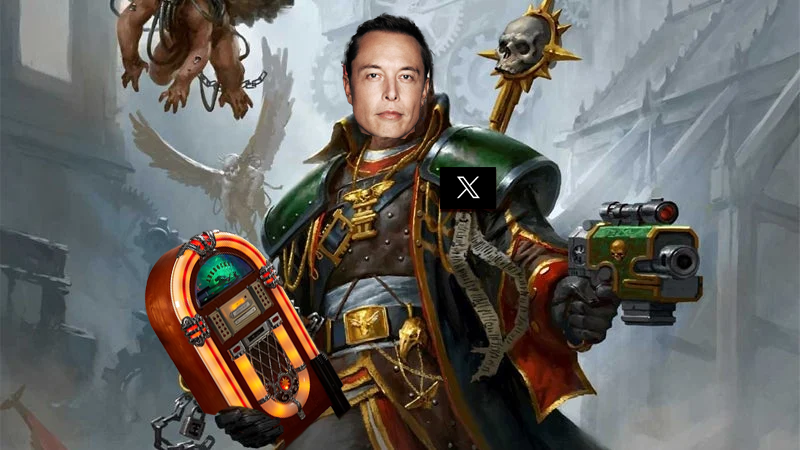

Inquisitor Mux

Despite my nature, instinct, and reputation as the fun police, I thought it would be funny to buy his clearly bullshit story delivered in his goofy German accent and let him off with a finger waggling. He begged me to keep it between us and I agreed. I kept that promise til death.

Lt. Hootonius


Well, we had a problem and a clear security risk in the Marshal's office lockers where everyone's confiscated firearms were stored. So I guess I'd stay put and wait for the Marshal to pass by which thankfully he soon did. I explained the situation and convinced him to deputize me, earning my assault rifle and a little peace of mind. I told him I'd guard the office until we could make some headway on the investigation and he agreed. I posted up with a clear line on the door.

It felt like an hour went by but it was probably more like 10 or 15 minutes. I was pacing, drinking bourbon, and doing pull-ups, wondering if I had played myself into a night of boredom, when I heard the Discord dings of folks joining the channel so I moseyed back to the PC.

I see it's Fehrlinger and Hootonius and hear "I'm gonna give you one chance" in that hilarious German accent which I interrupted to tell them that I was shooting them both in the face. "Why did you SAY anything?!" says Hoot as we all laughed. Traveller combat is smooth, just apply mods to the scenario and roll them bones. I thought I was gonna have to gun one down then weather a melee with the other, but Hoot found a rule where there was spillover fire for autorifles or something. After some mods and more laughter, both were down. With no back up, no idea of the greater situation, and mostly out of spite for having spared Hoot the first time just to be betrayed, I plugged them both again for good measure. And then Fehrlinger got a DM from a co-conspirator to plant some drugs on Kane, of which there were two, which in a fit of elite play he shared with me as "overheard from the communicator."

Herr Fehrlinger, Space Station Manager


The timing could not have been better for me and worse for him. I confirmed that I could identify the voice and immediately left to act on it. I conscripted Vickers from the Casino, again on a whim and against my instincts to avoid xfactors, and we dropped in on Nekro's Dr. Fearthing and arrested him to much protest but no resistance. Deleon and the Inquisitor were both there in the Research Lab with another of the "doctors", I think Kane again.

Reginald Fearthing, "PhD"


Apparently, they had truth-serumed Fearthing already and were satisfied because Nekro adeptly talked around their questions. I didn't know the full story there and really just stormed in with a rifle and demanded Fearthing's surrender. Vickers "confiscated" his taser when we turned out his pockets while the "doctors" jumped at a sample of some drug or something. Deleon ended up synthesizing what would end up being a big deal as the AffinityTwin but to my crayon-eater looked like some heinous biological weapon. "Wow that's horrifying. Destroy it. Now."

PSA from your friends at The Inquisition


The Inquisitor wouldn't go near it, which made me suspect him even more and vow to stay clear as any good Guardsman would, and neither would Kane. Eventually Moose called me the fun police and torched it in the incinerator. This apparently had something to do with a few of their goals, thus the reluctance I guess. I still don't really understand most of what happened after this point.

Some ship showed up, the Free Trader Ferigno, and was trying to dock. The Marshal had returned from an away party to investigate it. J's jive talking shipowner Ricks had a ship docked, too. Marshal said the Ferigno couldn't dock, there was some drama or something, and a buncha folks ran off. Those remaining searched around the Cargo Bay and found a face-hugger in cryo. It leapt out and I gunned it down, but its blood ate through the hull. We had a little time to react but the rest of the crew lost their bloody minds and ran out like their hair was on fire. I left and sealed the door while everyone on board fled to the Ferigno or escape boats. Inquisitor Mux had stolen Ricks' ship.

At this point I was lost but on track for at least some of my goals. If the Spore was on the station I could search it out. I was pretty sure Fehrlinger and/or Fearthing were killing the miners. Deleon had abandoned my protection despite telling him to relax, nothing to be done there. Turns out Baron von Weltraumfelsner and the Marshal had stayed on board. The Baron turned over all kinds of information, evidence, and the like regarding the miners and the tests being done on them and wanted only control of the station as payment. Marshal relented since the Baron Kane, who he had already given control, had fled like a coward. We all shook hands.
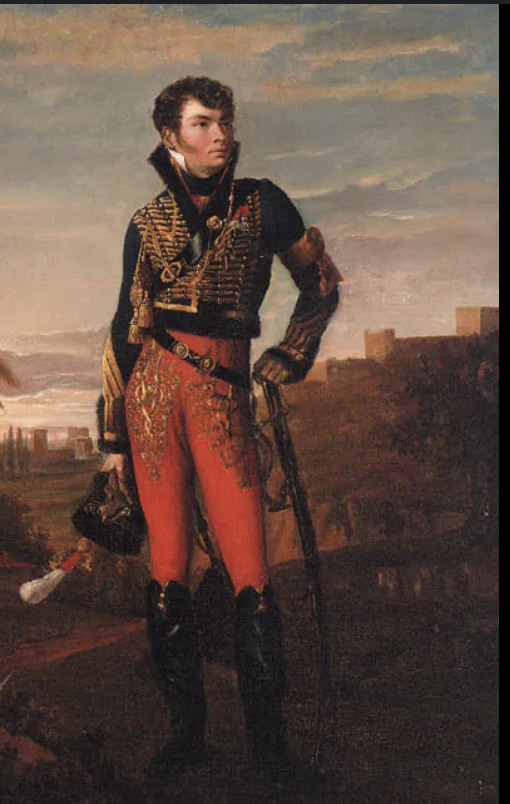
Baron von Weltraumfelsner


Some uncomfortable radio chatter was exchanged between the station and the Ferigno. Apparently, there was some xenos danger aboard. Oh man, so anyway. They also had the Spore allegedly. Well, that changed things. We offered to jettison their weapons in a cargo crate to be picked up if they did the same with the Spore, but in no way was anyone setting foot on the station. They declined and tried to spacewalk it over, which we turned away. Then Deleon tried to ram us with a lifeboat, which we blew up with the station's turrets.

Josh called it here. We jumped the station out of there but in hindsight should have destroyed the Ferigno. Unfortunately, we didn't know the real danger aboard. I keep getting compared to Earl Dumarest in these things, which I'll take. I was not betrayed or even killed by DunderMoose so I'm not sure this was a real Stein. I had fun with the individual goals and how well they were set up for us to play off of. I appreciate the invitation and there will definitely not be any problems for this Sector going forward.


Monday, March 31, 2025

Forests and Trees

There's a tongue-in-cheek schism of sorts between wargaming and storygaming. One is the aristocratic pursuit of clearly defined objectives and the other is prancing about in search of your character's motivation to not retire on the last score of treasure and open a coffee shop.

I think balance is important. Wargamers are generally going to establish an objective and then pursue it by the most efficient and expedient means. The wargamer is coded to "win". Storygamers concern themselves more with the journey and less with the destination, focusing more on the interactions and social aspects of the game. The storygamer is coded to "play". An Urfling recently noted that distinction and it stuck with me, as I've had some trouble trying to balance my wargaming nature with the storygaming tendencies around me.

Holding to an extreme view in either case is limiting your potential to play the game to its fullest. If you're only focused on the next objective, then any interaction that draws away from or delays pursuit of that objective is seen as a complication to be excised. It flattens play with your other players, particularly ones who don't share the same dogged mindset.

If you're only focused on playing off of the social aspects of the game, then when it comes time to actually pursue and achieve an objective you don't have the skill set or resources to contribute. You are a drag on the party's efficiency when it's crunch time.

In either case, a player needs to see the forest, the bigger picture, and find the ways to engage with the game during the appropriate phases. The trees are important and help a player identify what's most fun about the game to them, but the game is the forest. It's the combination of and interaction between all phases, all mechanics, all tiers, all... whatevers... that makes RPGs the most exciting and broadly satisfying experiences to their players. Don't get lost.

Friday, November 15, 2024

Logistics Wins Wars

Lady Echellet (Fighter ???) of Guarda has been a prominent and uncommonly Good aligned NPC in the Bandit Mountains of Trollopulous since we began play there. We rescued her from the necromancer at Castle Von Necro very early on and she's been an ally ever since. A combined force of gnolls and bandits attacked Guarda and captured her when she rode out to defend her home. She was replaced unbeknownst to anyone by a body double in a stupor who was then later kidnapped by a different bandit. Our primarily Good party wasn't going to stand for that.

I'm going to shine a light on a fundamental truth of warfare: logistics wins wars. Tactics are important but nothing matters as much as being where you need to be with the materiel and personnel you need to have to achieve your objective. In real D&D, the most important resource is time. There is no pausing the session to return to a scenario because everyone got sleepy. Failure to respect this truth by our Caller (that's me) cost us initiative and advantage repeatedly, leading to a less than total victory and causing more casualties than necessary including our ranger's Pegasus mount (again, me, making this failure particularly painful and personal).

Session 1: We learned Echellet had disappeared shortly after the gnoll attack on Guarda. We investigated and suspected she'd been kidnapped by a thief and/or spellcaster, likely on a large flying creature. We mobilized immediately and tracked them, the ranger taking point due to speed on his Pegasus. He was able to locate and destroy the culprits (a Patron player, we learned later) and rescue the Lady, but it was a plant or body double. This session actually went mostly as planned and we kept the time-wasting to a dull roar.

Session 2: We extrapolated on what we thought we knew, leading us to mobilize on a location where we thought the real Echellet was stashed. Hired troops, organized, equipped, took a lot of session time. Random hobgoblin ambush on the road distracted us from our objective. We diverted to track them to their lair and get their loot which ate up the rest of the session. While it was a good score, it was not the objective. We achieved nothing in the pursuit of our goal. 

Session 3: Some additional investigation changed our target to a nearby mountain range where we discovered the Talibandit group entrenched in Afghanistan-style caves and tunnels. We broke in, killed a bunch, and took a few captives. They had weird weapons like rifles that were inert once we got away from the mountains. This was recon so can't really consider it time wasted. Could be a mixed blessing changing targets, too, since this would end up being closer to the target.

Session 4: Captive revealed a map and confirmed the presence of prisoners, including one that fit Echellet's description. We returned, killed a bunch of entrenched riflemen with RPGs, found a boulder trap and some imprisoned animals mimicking the call of a mythical monster. Couldn't find Echellet, ran out of time, exfil. 

Somewhere around here we had a spooky Halloween session. It was fun, but again, a distraction away from our stated objective. Real time is a real resource.

Session 5: Dropped a message prior to session to the bandit leader, Usama Loot-Laden (another Patron), to turn the prisoners over to us or else. Also the captive we had was liberated by magic. We returned with the map, troops, and a plan. The thief would infiltrate and locate Echellet, then we'd attack and cause a distraction. He'd try to free or at least keep her from being executed or moved. We got into position but the sneaking portion took most of the session. A recovered note indicated Echellet had been turned over to another villain Patron. Our objective now became one of justice and/or retribution. 

We could leave, again, or occupy a nearby ruined village and stage for an assault next session. Having been thwarted time and again by failing to execute our plans efficiently, we stayed there, killed the gnolls in the ruins, and dug in. With only a day of downtime and no contact with the enemy we hoped to avoid notice until we could launch our attack. We failed. This was the most painful and costly of the sessions where the caller had mismanaged session time. We should have engaged the enemy instead of trying to get cute.

Session 6: We woke to find a magical forest boxing us into the ruins and the valley beyond. Usama offered a parley flag but betrayed it, cementing his death sentence. A hard fought battle resulted in many casualties that could have been avoided by engaging the enemy the session prior in their caves where they could not utilize their numbers or druidic magic and we could apply the advantage of our leveled PCs. We killed most of the enemy troops, but many of the druids escaped. The loot and casualties are still being counted but it was unnecessarily costly and bloody all because we failed to manage our time properly and execute on stated objectives.

Some of our decisions as a group in the sessions leading up to this scenario could be reviewed, like choosing not to negotiate with the kidnappers or pay any ransom. Communication from both sides was simply demands of one variety or another so maybe there wasn't an opportunity to resolve it that way. Ultimately, we were victorious in battle but failed to achieve the primary objective of rescuing Lady Echellet. The lesson here is choose an objective and make your every action serve that objective. Otherwise you'll bleed to death from paper cuts that drain resources, most importantly time, until your final confrontation is more difficult than necessary. Delays allowed the enemy to move Echellet and prepare for that final battle and the most galling part of the whole thing is that I fucking knew better.

RIP Convess.

Thursday, September 26, 2024

Oberholt: AAR

Oberholt has wrapped up with a final victory of Law over Chaos. Coalition forces under the command of Lord Eros Tyring defeated the invading Chaos god Khorne's ground army of demons while Redcorn sacrificed himself and half the population of the realm to battle Khorne's aspect on the spiritual level. After 2 1/2 years I'm going to pass off DMing to another player and take a bit of a break.

I want to take this opportunity to talk about what I learned during this experimental campaign. I've spoken at length in session reports about what we were trying to do and tried to share what I was learning as we went. Essentially, we were testing the brOSR methods of 1:1 time keeping, staying as close to rules as written as possible, and reliance on emergent gameplay over predetermined plot points with a group of players who are not chronically online and hadn't formed their own opinions for or against.

We used the ACKS system which is the only modern ruleset that can compete with the OG AD&D for this game style. I avoided my predilection to try to be prepared for every eventuality and let the dice determine most everything, leaning into randomly created dungeons, treasure hoards, and points of interest in the wilderness. This combined with low or no preparation towards sessions is referred to as Lazy DMing and is quite aptly named.

I'm going to go into what worked, what didn't, and then offer some advice for anyone looking to run a game like this.

What worked:

- 1:1 time keeping: It's the single best way to encourage engagement in and longevity of the campaign. The pros far outweigh the cons.

- RAW: System choice is key to running a successful campaign. Use something that can support a wide variety of play options with actual rules. Non-game non-systems are bad at this, requiring too many rulings from the DM. DMs are not game designers. Hell most game designers aren't game designers. Play AD&D or ACKS and read the fucking manual (RTFM).

- Patrons: Patrons assume the role of NPCs in the world and offer a breath of life by playing to those NPCs' interests with energy the DM can conserve for other places. Use them to get input on what the big bad might do in the dungeon after several delves, or the witch in the woods might do, or the dragon the PCs discover down the way. The Patrons in Oberholt all generated gameable material just by running their domains and interests as independent actors rather than a DM contrived part of a narrative. Patrons are a double-edged sword which I'll get into later.

- Downtime: With 1:1 time keeping comes the opportunity for PCs to take actions during "downtime", when no session play is happening. This allows them to liquidate treasure, create magic items and spells, recruit mercs and henchmen, and anything else they can think to do to set the session up for an actual game. No one wants to RP the haggling with the blacksmith for the price of a sword, gtfo of here with that. This too is a double-edged sword which I'll touch on later.

- Multiple parties: 1:1 also opens up the opportunity for multiple parties of PCs. Whether your players are confrontational and choose PVP or more cooperative, multiple parties gives every player a chance to try different classes and alignments they wouldn't normally try. It adds a different dynamic than "We're all heroes" or "We're all villains".

- Player agency: Player choices drove the direction of the game, not DM railroaded plot. Let your players show you what they want out of the game. You're a referee, not a narrator or playwright. Run the game that emerges from the convergence of player choices and dice results.

What didn't:

- Setting generation: RTFM. I made choices as a result of foolish notions from previous experiences when generating the setting that ended up being a problem the whole campaign, most significantly the available markets. Follow the advice that your system offers for generating the setting, it's there for a reason.

- Scale: With inexperience and a new playstyle, I made a mistake early of revealing the entire map. I was leaning into the Lazy DM concept particularly for downtime. The intent was to allow travel and things to happen without my oversight during downtime. What actually happened was the game shrank and the wonder of exploration was taken from the players. Let the players explore the world, that's part of the game.

- Dismissal: With expanded scale came the dismissal of small things like mundane random encounters and smaller domains that fed larger. There was little to no interaction with smaller villages or hamlets that should technically exist to support the larger domains on the map. This cost valuable opportunities to engage with the world and focused the game only on big events. Small details matter and can generate gameable scenarios, don't overlook them.

- Downtime: Both with Patrons and PCs, I allowed unsupervised downtime play. The intent was to preserve DM energy while allowing the players to play the game according to their interests and energy levels between sessions. What happened was an explosion of resources from "farming" lairs and other actions and a "turtling" mentality, where those engaging in downtime were rewarded for farming rather than engaging with the other players. These resources inflated the economy and essentially ruined the game. Downtime should be run on turns with DM oversight. The alternative doesn't work.

- Lazy DMing: Most of the biggest mistakes that I made during Oberholt were made with an eye towards how I could make the game easier for me, the DM. Zeroprep can work, sometimes, but ultimately it's inferior to necessary preparation of setting and session. It's ok to prepare the ground, just not the action. The whole purpose of avoiding over-prepping as a DM is to avoid wasted effort. If the players truly have agency and the ability to choose their own course of action, then you don't want to find yourself preparing content that will never be interacted with. You have to find the balance between zeroprep and prepaddiction.

Advice:

- Say no. What I mean is that players will push you. They'll argue and finagle and "yeah but" you to death. It's ok to say no, even if it's only "no I need a chance to consider". You want to indulge them in their interests without giving them everything. Like most things it's a balance, but any ruling you give becomes a rule of the campaign. Consider house rules and edge cases carefully.

- Avoid Patrons in high level established Lawful positions in civilization. The caliber of men in our gaming sphere are builders, creators, disciplined men of high moral standard who will end up running the world. While this is good, in general, it flattens play in the game. Patrons should be if not antagonistic, at least apathetic and/or opportunistic when it comes to PCs. They should offer missions, but they should always "get theirs" from it. Very very rarely should there be gimmes or true total cooperation. Discuss that with potential patrons prior to recruitment.

- Henchmen are not extensions of the PC. They have their own desires and roles within the game. If the player does not enforce that side, then you'll have to.

- Avoid anything that results in too much energy spent for too little gameable content. In Oberholt, it was unsupervised downtime and the Machinist class. Encourage players to pursue their interests, but learn how to implement those interests into the game. This ain't solitaire.

- This game style can run perpetually. Know that going in and prepare for what you want out of the game. ACKS suggests a series of threats to the world. Once those threats see some resolution, win or lose, it can be a natural stopping point for the campaign. Alternatively, you can run perpetually in the same world. If doing so, I recommend sharing DM duties for different regions or different threads/hooks/dungeons etc. Even different tiers, one running lower level play, one running larger scale stuff. Whatever the campaign and group can support.

- Your mileage will vary with player interest. What's called "mudcore" gaming will be more common and comfortable to the conventional player. It's harder for them to see the advantage of setting goals for themselves, engaging in domain play, and expanding their view beyond the dungeon. Be patient and try not to force them. With luck you've got a player or two that can help guide their peers into the next tiers of play, but if not, advise where you can and otherwise just run the game the dice put in front of you.

- Don't be afraid to ask questions of your friends who have done this before.

- Don't be afraid to admit mistakes and correct them.

I'm excited to see what my local friend comes up with when he takes over DMing for the group. I'm hopeful that this AAR offers some useful information to anyone considering running this style of game. I'm thankful for the players in Oberholt that made the thing go for as long as it did.

Thursday, August 8, 2024

On The Shuckstein

The Shuckstein was played on 8/7/24 in the Dubzaron campaign and run by the incomparable Bdubs. The event was set in the Sepia Uplands region, a barbarian stronghold with a large capital city that could justify the presence of The Shucked Oyster, some house of ill-repute from a PDF merchant. I was not looking forward to the degeneracy from a module based around a brothel. Imagine my delight when the session opened with it burning down!

That delight faded when some pimp and hooker showed up, fingered the PCs as the arsonists, and fled the scene as the authorities moved in to arrest us. My PC was Warchief Einar Fann, a barbarian warlord sworn to the service of the region's ruler. I hit 'em with the, "Do you know who I am?" When that didn't work I knew something was amiss, confirmed by the LT of the arresting squad's bloodlust. A short battle ensued wherein a handful of mercs tried to apprehend an adventuring party. Some of the party chased their fleeing accusers while the remainder resisted arrest.

I'm not great at these Diplomacy style games. I'm a direct player and don't utilize subterfuge well. Bdubs knows this and when my dumbass Barbarian dropped a cursed helmet of alignment change on his dumbass head months ago, the DM turned it into a hook to serve Surtur, the Norse Fire Giant deity, in order to force me into conflict. I've been playing into that betrayal for ages trying to keep it secret while working against the party to free Surtur from his prison beyond the curtains. I was even able to convert the most suspicious PC in the party with another helm before he could find any proof and out me to the Lawful and/or vengeful members of the party. The dungeon exploded before I could realize any other plans.

The players in Dubzaron, including myself, are cooperative. I'd started being less so during sessions and was standoffish to friendly PCs during the opening sequence of The Shuckstein, especially Xanthos the Lawful cleric and Standing Mountain the elf. Once we defeated the charmed LT, me and my henches grabbed him up and split towards my moderate sized army camped outside the city. I was second-guessing the decision to separate here as I know convergence brings resolution but with no ground to go to, unknown factions at work, and no faith in local forces to recognize my rank, I didn't have much choice.

Interrogating the LT confirmed my suspicion that he was charmed. When Xanthos showed up to inquire about him I turned him away to "come back tomorrow" to cast spells and such. I let him believe I had tortured the captive to death. My plan was to keep him as insurance in case the authorities came after me for real.

In the meantime, I sent a message to the Great Hall of Warchief O'Conner but he hadn't been seen for days. Uh oh. If Kyle was compromised, this whole thing could go tits up. I immediately asked whether security looked to have suffered in his absence with the intent to just take control of the city. Alas, it seemed the day to day operations of the place were still running smoothly.

I met with Jalaan who had the charmed Tuck and Doc in tow. I guessed his identity as Slenderman and he dropped the charade. He told me he was going back to Barsoom if he could get this evil altar and free Surtur. I wanted to free Surtur. I wanted Slenderman gone. Sounded great! If he betrayed me I'd just kill him or die trying. We got beef.

I needed to get back into the action so I let Bdubs know I was gonna find Lambert. After some delay I just asked Lambert's player if he could be found. Since he wasn't hiding and was looking for me too we met in the middle. Einar and Lambert had a professional relationship from session play but translating that into an event like this is difficult.

We met and neither offered violence. I implicated the cleric or the elf as the arsonist and turned over the captive as a gesture of good faith. Lambert agreed to arrest them and interrogate them to get to the bottom of it. Great, elves suck and Xanthos was the only PC able to discover my cursed helm. Win/win for me there. It was also agreed that I would "hang back" so Lambert's authority wouldn't be suspect when we arrived at the ruins of The Shucked Oyster.

Lambert and his crew went in hot to an ongoing battle. I crept up with my troops as perimeter security in case anyone tried to slip out the back. My goal here was to get the altar which was Svetlana's. I was also going to kill anyone that got in my way, especially if I could do it without witnesses. I no longer needed the party to delve the Queen's Rest dungeon since it exploded.

Some glittery silhouette showed up, I chopped it in the face, and it hit me with fear magic. My henches cured me and put it down, revealing it to be Svetlana herself. Xanthos ran around the corner into the alley, but the other part of the fight was over before I could kill him, too. I sent my thief to sneak into the ruins while Lambert was arresting everyone. He found the altar but it was too big to steal.

I wanted to kill Slenderman on the way to the mountain once we got clear of the city but it was too late in the night to run another combat. When he didn't immediately go back to Barsoom on Surtur's release I knew I shoulda forced it. I claimed violence then and there to be resolved at some later date in downtime.

The session was a fun way to resolve my particular loose thread from months of session play and rattle the status quo of the campaign world. We'll see if this Always Braunstein Daily takes off.

Sea Legs

ICE had delivered a high value captive to the Temple of Turas in Allegany and spent the rest of our downtime since the last session copying ...